
On Thursday 16 April 2026, the team travelled to Warwick Arts Centre to deliver training session four. I was incredibly tired because we had been at Derby Theatre the day before, meeting their Community Team. The journey to Warwick Arts Centre is a long one for me, meaning that I had to get up very early in the morning to arrive on time.
I was also in a lot of physical pain because carrying bags for camping trips had damaged the rotator cuff in my right shoulder, and walking more than usual meant that the arches in my feet had collapsed again due to my plantar fasciitis. I had almost forgotten that I had arranged to meet a previous mentor for lunch at Warwick Arts Centre, but luckily, I still arrived on time to meet her, and my phone reminded me that the meeting was happening.
We had a lovely conversation as I had not seen her since my placement at The Belgrade Theatre in 2019. She now has a six-year-old child; when I last saw her, she was on maternity leave. This amazed me, particularly the passing of time. We talked about all things theatre, and she agreed to an introduction with a friend of mine who is planning an outdoor community theatre project. I introduced her briefly to my creative enabler, Liz Leck, as I wanted them to meet because they have both taught me so much and are both incredibly intelligent women who love the arts.
Liz had been taking photographs of potential quiet spaces around Warwick Arts Centre for our session later on. My mentor and I said goodbye, and Liz and I went to set up the space for the session.
Session 4 was about the history of quiet spaces and relaxed performance. We also discussed Battersea Arts Centre as a relaxed venue space. I had found a video that was so effective at showing what sound sensitivity felt like to an autistic individual that I had to leave the room when Liz was showing it because it made me have a meltdown at home. That is how effective it was.
It was amazing for me watching the Operations Manager disagree with where quiet spaces would be placed, saying that he would “hate it no matter what the team did”, and then seeing him go from that perspective to really enjoying designing a quiet space with his colleagues and understanding why it was important from the perspective of a neurodivergent audience member, staff member, or artist.
The team appeared to really enjoy designing the quiet spaces, and whilst they were drawing, I hid behind a podium for my own quiet and comfortable space. It was really nice to be able to be myself in front of the Arts Centre team without judgement. One staff member gave me stickers and emailed me really positive feedback, which was really kind.
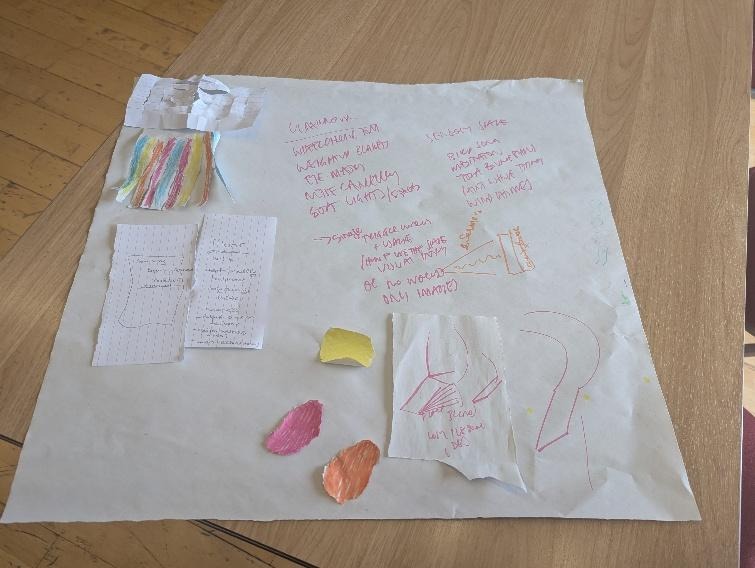
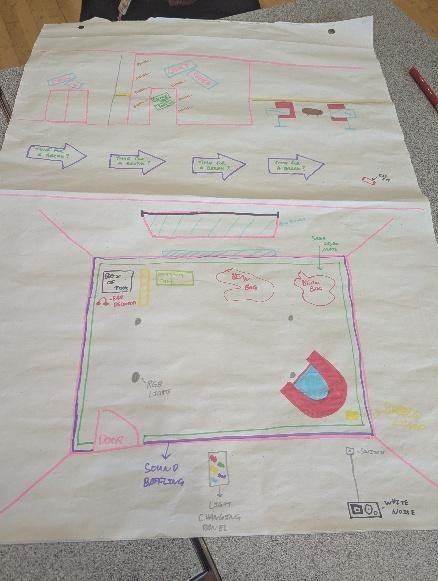
After the session ended, I had a safeguarding meeting with the Open Theatre Company safeguarding group, and then I made the journey back home to Derby. I ate dinner at Wetherspoons in Birmingham New Street Station because I had to eat before 20:00 hrs, otherwise I get very uncomfortable acid reflux. I got home around 10:00 pm, and I went to bed tired but feeling contented and like the Alternative Voices access training was really making a difference in the art world.
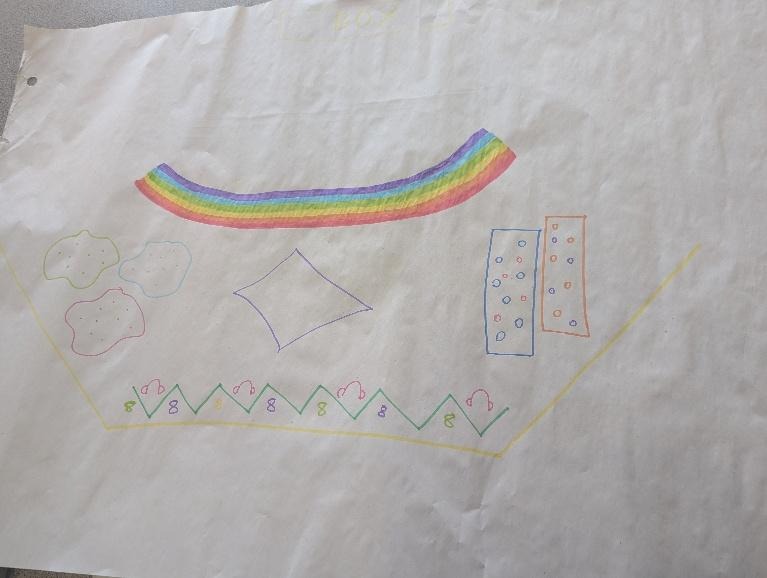
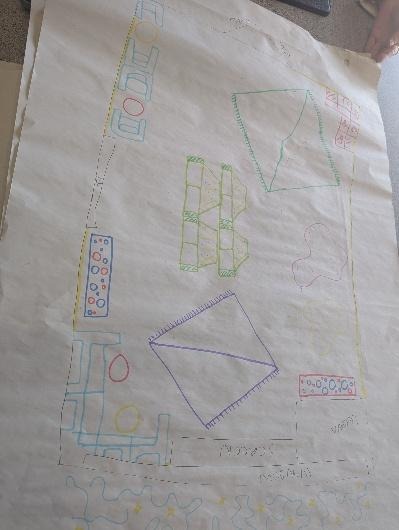
On Tuesday 12 May 2026, Session 5 of the Alternative Accessibility Training was held at Warwick Arts Centre. This session was about the legacy of the training and creating long-lasting organisational change. This is not an area that I usually lead on, and so I had to read several books to enable me to design an effective session with activities that met the organisation’s objectives.
What surprised me most about this particular session was how emotional it got in the room when people were asked why they do access and inclusion work. We realised that there is a big difference between a very personal why and a professional why.
For example, some of us have lived experience of conditions or support family members who have experienced discrimination due to their conditions. Some of us understand the impact of theatre and the power that it has to make a positive difference in people’s lives. Others believe that all people should be able to access theatre and that access and inclusion should be the law.
Whatever the reason, there is room for all of it in the space, and people use their reasoning to drive them forward and power their motivation.
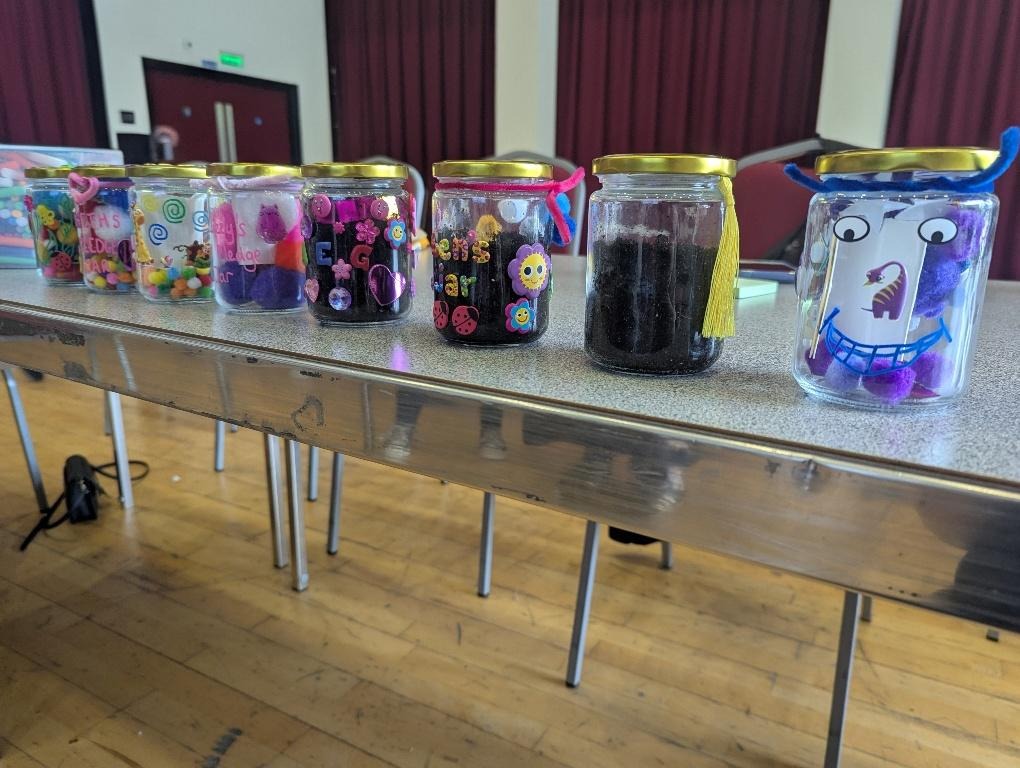
At the end of the session, learners made pledges to access and inclusion and designed pledge jars to remind them of their pledges whilst they are at home and away from work. What delighted me was the creativity of the Warwick Arts Centre team and the difference in the design of the jars that they made.
After the session ended, I went to eat a victory cheesy garlic bread and drink a cosmopolitan cocktail in the Union Bar. I then went to the dressing room that was kindly provided by Warwick Arts Centre so that I could deliver the second Alternative Voices online training workshop on psychological safety for neurodivergent actors.
Everything that could possibly go wrong did. We had extreme internet connection difficulties, which meant that I could not see any of the other people on the Zoom call. If this had happened five years ago, I would have probably burst into tears. However, as a group, we managed it, and we posted the presentation into the group chat so that everyone had it.
Nicky Priest very kindly told me if anyone needed support because he could see their faces on screen and I could not. Despite the technical difficulties, I got positive feedback from the group saying that the session was very informative and that they learned a lot.
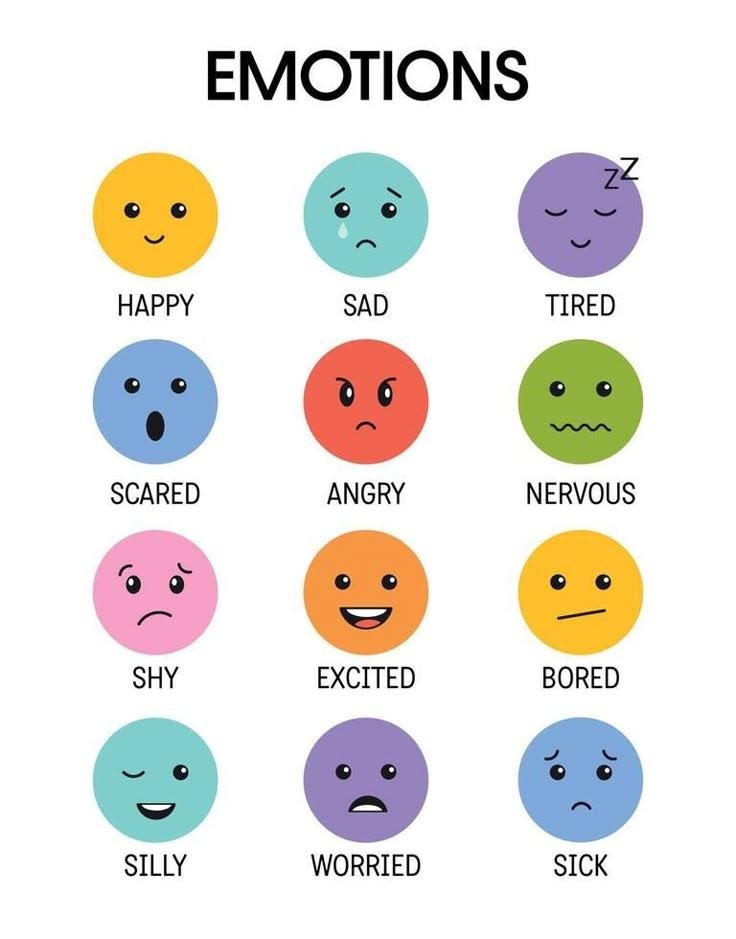
There were nine people on the call, and we did get to do some acting at the end of the session for the last 20 minutes when my internet connection decided to work properly. Nicky acted out anger and I acted out sadness for the group, and we explored what each emotion looks like.
After the session, I made the long journey back to Derby, and after two trains, a taxi, and arriving home after 10:00 pm, I went to bed feeling very grateful and proud that Alternative Voices exists and that we know such kind and talented individuals.
As always, there are some thank yous to give.
Firstly, to Open Theatre Company Coventry and Birmingham for continuing to support our work.
Secondly, to Arts Council England for funding this incredibly valuable and worthwhile project.
Thirdly, I would like to thank Liz Leck for all of her support throughout this project. I would not be able to do it without her.
Fourthly, I would like to thank Warwick Arts Centre for their engagement and kindness throughout each session.
Finally, I would like to thank Matt Recardo and Nicky Priest for their support during the delivery of our second online workshop. It means more to me than I have the words to express.